Now available with English subtitles
[youtube=http://www.youtube.com/watch?v=VpFokUQzkws]
Now available with English subtitles
[youtube=http://www.youtube.com/watch?v=VpFokUQzkws]
So, I just recently found something interesting when searching for multiplayer military flight arcade game, especially with combat helicopters.
HELIBORNE

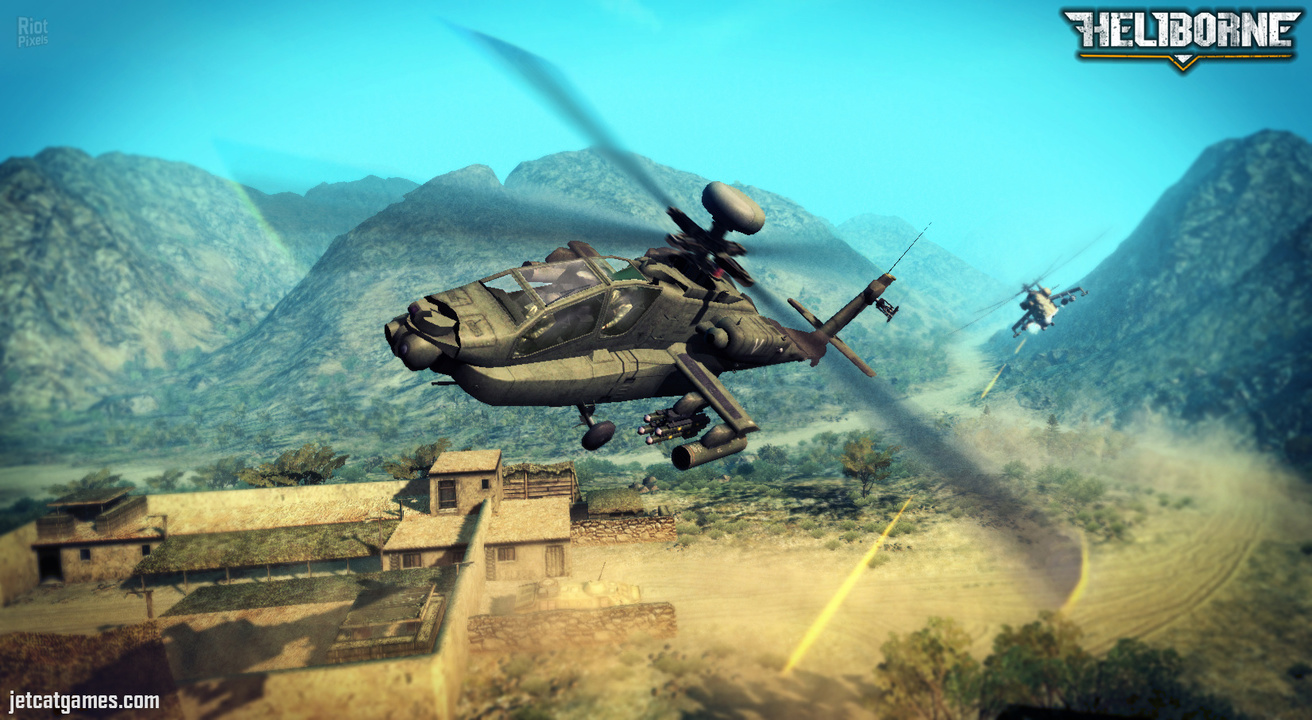
Heliborne is a tactical helicopter multiplayer arcade game developed by JetCat Games studio, based in Vilnius, Lithuania. Currently, it’s still in Alpha development, so only invited players can participate in the early development.
Even if it’s still in Alpha stage, JetCat devs have already introduced the early gameplay of the Heliborne on 29-7-2015.
[youtube=http://www.youtube.com/watch?v=-_0jkjdJct0]
There are currently 2 game modes introduced in the game: Skirmishes and Best of Five Rounds.
2 Maps currently available in the game: Afghanistan and Vietnam.
3 types of helicopters are present: Recon, Transport, and Attacker.

Various bases scattered around the map and must be captured to gain victory points. You need a transport helicopter to capture, loaded with airborne troops, instead of a standard attack helicopter.
There’s also a gameplay review explaining the total gameplay of the Heliborne by eNtak:
[youtube=http://www.youtube.com/watch?v=fOUOawJPeLU]
You can register for Alpha Invitation from here:
This game is still in Alpha stage, so expect many changes during the development.
P.S.: The good ol’ days when playing arcade combat helicopter on PS1 and PS2 reboot 🙂
 There is a serious complain by War Thunder players right now (especially American and German ones) about one of the recent updates released a few days ago, the Update 23.09.2015 (Server Update).
The update notes were simple, yet so stronk that it can send a whole Tiger Army returning to their homeland. (lol)
Back to Topic:
Continue reading “War Thunder – Soviet 122 mm Bias™ by Gaijin.net”
Recent Q&A from a Russian source has announced that the Chieftain Mk.6 heavy tank release will be delayed for the next 1-2 years, and possibility to have its own heavy tank branches, filled by the other Chieftain heavy tank prototypes.
The planned replacement of the FV215b for now is “Super Conqueror”, a heavier version of the Conqueror with increased armor + additional spaced armor all around.
Photographs of the standard Conqueror + spaced armor:

Conqueror’s spaced armor document:


J. Walter Christie was born on May 6, 1865 in New Milford, New Jersey. Christie began his first work at 16 years old at DeLamater Iron Works in New York City. Christie had been involved in many works on the construction of battleships and submarines, while working on a variety of his own experiments at the same time.

Continue reading “Commemorating The 150 years of J. Walter Christie”
In 1944, the Germans were actively developing heavy anti-tank guns. Since it was clear that mounting larger and larger guns in conventional methods was nearly impossible to do, they offered some different self-propelled gun designs to meet such requirement, and one of them was to use the Panther hull, the also called as Waffenträger Panther concept.

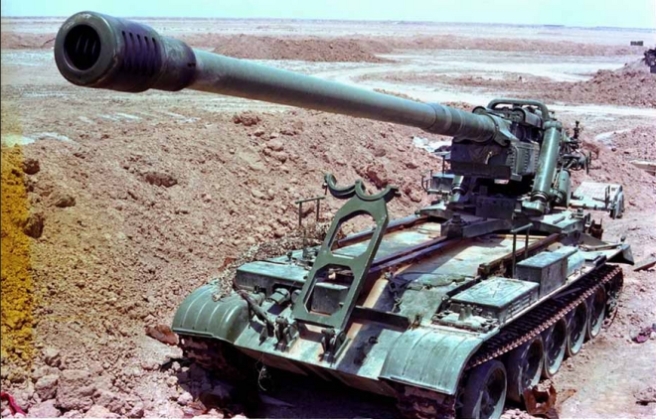
Based on the blueprint, it would use the 12,8 cm Pak 44 L/55 heavy anti-tank gun. But in theory, Waffenträger Panther would also be able to mount much bigger guns ranging from 15 cm – 17 cm caliber. The concept should be, more or less, similar with the North Korean M-1978 Koksan, also armed with an 170 mm anti-tank gun of unknown origin.


Independent heavy tank, was assembled in a single copy and has been used for a variety of pilot programs until 1935, after which it was transferred to the museum in Bovington.
There is a serious controversy regarding the A1E1 Independent, especially with its design, which is allegedly the basis of the Soviet T-35 heavy tank.

Western historians argue that it was inspired by it, but this is quickly rejected by many Russian specialists. It’s impossible to know the truth, but there’s strong evidence to support Western claims, not least the failed Soviet attempts to purchase the A1E1. At the same time, the influence of German engineers, who in the late 1920s were developing similar designs at their Kama base in the Soviet Union, cannot be discounted. Also, a British officer Norman Baillie-Stewart, sympathized with Nazism, gave the Independent blueprint to the Germans unauthorized. What is clear is that borrowing military technology and ideas from other nations was common to the majority of the armed forces in the inter-war years.
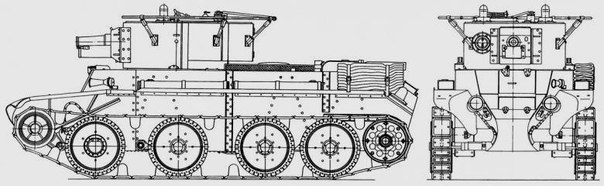
The BT-7A Artillery was developed based from the self-propelled gun variant of T-26. There were 2 variants of the tank; 45 mm standard gun and 76.2 mm close range artillery gun. Moreover, these guns had to be compatible with the original turret. Unfortunately, the turret was so crammed that even the crew of BT-7A couldn’t breathe freely, and the ammunition carried would be strictly limited.
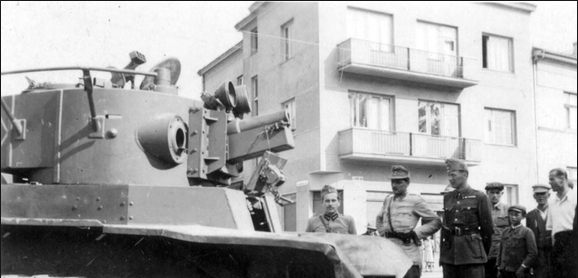
Fortunately, they solved the problem by using the T-26-4 turret for the BT-7A, modifying the turret a little bit to make it compatible in order to mount bigger guns as such. As a result, the BT-7A passed the testing, and was ready for production.
It wasn’t easy to accept the BT-7A into service, mainly because unclear effectiveness of the BT-7A compared to other tanks with on par performance. But by 1937, they (The Soviets) finally decided to begin serial production of the tank. However, the production didn’t go smoothly as planned, because of reasons such as the incomplete BT-7A gun production, as it wasn’t a highly prioritized tank to mass-produce, not even slightly above the original BT-7. Of the 154 BT-7A produced, 132 were used in service, while 22 were used for further experiments in order to mount newer guns for the rest.
These new guns were the A-11 and F-32. Even though the guns were capable enough and recommended for installation on the BT-7A, They were never installed for unknown reason.
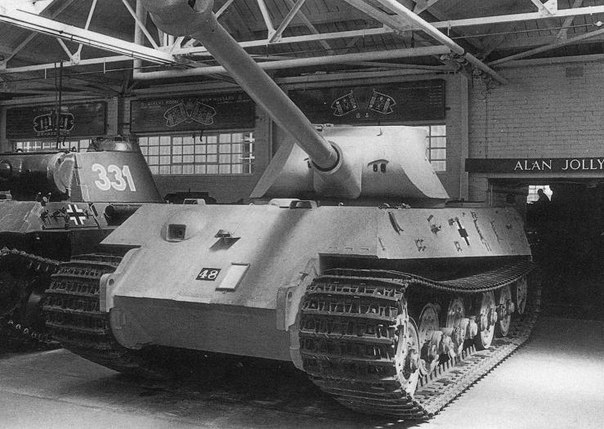
The supertested VK 45.03 (tier 7 heavy tank) was a prototype heavy tank that resulted from a plan to improve the existing Tiger I into the Tiger II, also known as Königstiger.
In short, it was, in principle, a further development of two previous projects from the VK 45.0x series. The Henschel und Sohn company soon started to work on the tank by combining the VK 45.03 project with the Panther to create the next evolution of both tanks, sharing similar aspects in a combined project, which would result in new tanks as Tiger II and the Panther II.

The early model of the VK 45.03 was pretty much an enlarged Panther model, but it was changed after Hitler issued a further armor increase: 150 mm frontal armor and 80 mm side armor. Soon after the Panther II project was ceased due to the urgent task of expanding production of the original Panther tank, they were now focused entirely on the Tiger II development.